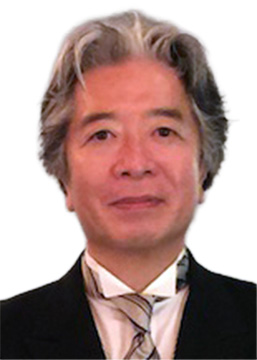
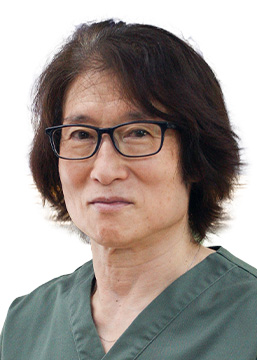
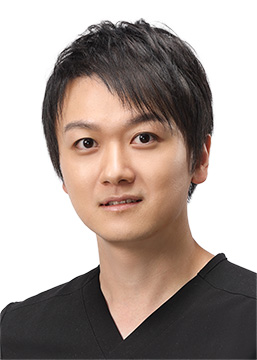
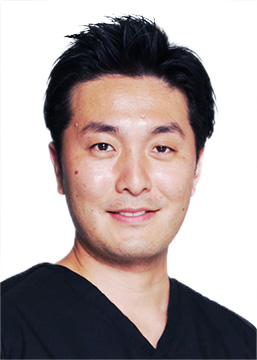
Former Clinical Professor, Faculty of Dentistry, Tokyo Medical and Dental University (Current: Institute of Science Tokyo)
Part-time Lecturer, Department of Conservation Dentistry, Tohoku University Graduate School of Dentistry
The development of surgical microscope application in root canal treatment
It has been approximately 30 years since surgical microscopes were introduced into dental treatment in Japan. Initially, they were applied to surgical endodontic treatment, but subsequently, their application expanded to conventional endodontic treatment, and now it is broadening to encompass general dental treatment.
This lecture will reflect on the changes in endodontic treatment and the advancements in dental microscopes from the time Dr. Izawa first began using surgical microscopes for endodontic treatment in 1994 to the present day.
Lecture II Speaker:
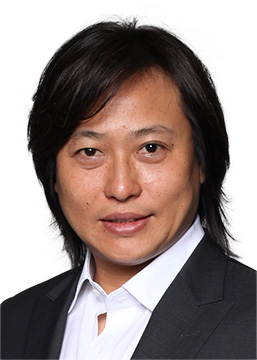
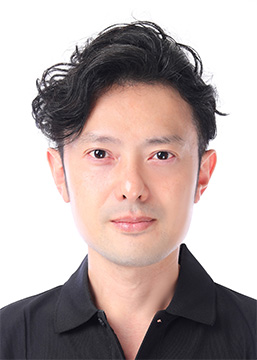
Dr. Okawa, Masayuki (Japan)
Secretary and Board member, Society of Japanese Clinical Dentistry (SJCD)
Former Director, The Academy of Microscope Enhanced Dentistry (AMED)
The Concept of Veneer Tooth Preparation Design in the Digital Era
Veneer restorative treatment has become a recognized alternative to crowns, thanks to clinicians’ adoption of biomimetic approaches and increasing patient demand for minimally invasive procedures. The integration of digital technology and monolithic restorative materials has led to a global reevaluation of preparation protocols and essential skills in dentistry. A key advantage of digital dentistry is improved visualization; aspects like undercuts, over-milling, and material thickness are now easily identified on digital screens, substantially improving preparation accuracy. In this lecture, Dr. Okawa will discuss veneer tooth preparation design, highlighting digital tools.
Lecture III Speaker:
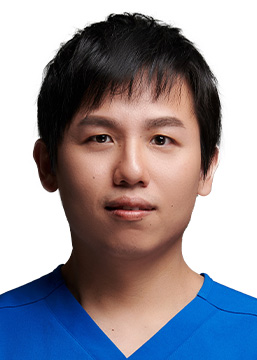
Dr. Kuo, Yi-cha (Taiwan)
President, Taiwan Academy of Microscope-enhanced Aesthetic Dentistry
Precision in Layers: Microscopic and Optical Principles for Esthetic Anterior Composite Restorations
Natural esthetics in anterior composite resin restorations emerge not only from technical execution, but from how clinicians observe and interpret tooth structure. This lecture explores the histoanatomic layers of natural teeth, examining the structural and optical characteristics of enamel and dentin, including variations in opacity and translucency. Building on this understanding, a structured diagnostic and layering strategy for composite resin restorations is presented, linking macro-level form with micro-level detail. Through microscopic dentistry, enhanced visualization refines the clinician’s perception of surface texture, material interaction with light, and subtle transitions, allowing restorations to move beyond imitation toward a more faithful interpretation of natural teeth.
Lecture IV Speaker:
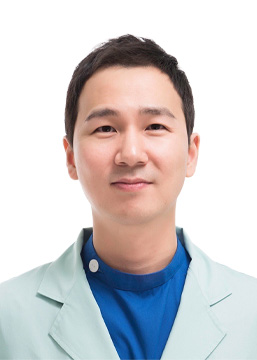
Dr. Yoo, Ki-Young (Korea)
Former Director of Education, Korean Academy of Microscopic Dentistry (KAMD)
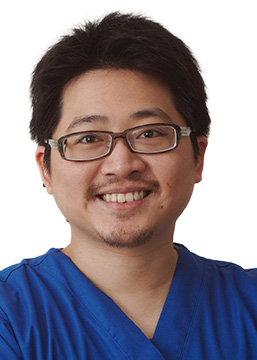
Dr. Yoo’s presentation will explore the implementation and clinical use of the ZEISS EXTARO 300 microscopes at InterSeoul Dental Clinic, where three units are operated with different customized setups. He will share the process of introducing the microscopes and highlight key considerations in optimizing each configuration to enhance clinical workflow and visualization. In addition, the presentation will feature advanced endodontic retreatment cases performed under the EXTARO 300, presented with detailed, step-by-step explanations. These cases demonstrate how a well-integrated microscope system can improve precision and efficiency, offering practical guidance for experienced users seeking to refine their clinical protocols.
Lecture V Speaker:
Dr. Akiyama, Katsuhiko (Japan)
Coming soon
Lecture VI Speaker:
Dr. Chu, John (Taiwan)
Member, Bio-Emulation Taiwan
Founder, Zimmer Orange Dental Re-Education Center
Esthetic Rehabilitation under Microscope
Dr. Chu presents a microscopic approach to esthetic rehabilitation, focusing on how enamel preparation and soft tissue response shape long-term beauty. Through selected clinical cases, he illustrates how precise margin design, minimal invasion, and respect for biological contours enhance both adhesion and natural tissue integration. The lecture emphasizes the harmony between hard and soft tissues — showing how microscopic precision transforms restorative work into a biologically sensitive and artistically balanced process.
Lecture VII Speaker:
Dr. Iwata, Jun (Japan)
Member, Bio-Emulation Japan
Member, Society of Japan Clinical Dentistry Osaka Branch(Osaka SJCD)
Utilization of the Microscope in Restorative and Prosthodontic Treatment
The incorporation of the microscope into restorative and prosthodontic treatments enables clinicians to achieve highly precise treatment outcomes. Furthermore, documenting treatment procedures provides valuable opportunities not only for reviewing and explaining the treatment to patients, but also for clinicians to re-evaluate and refine their own techniques. In this presentation, Dr. Iwata will introduce clinical cases of restorative and prosthodontic treatments performed with the aid of a microscope and discuss key checkpoints and considerations for its effective use.
Lecture VIII Speaker:
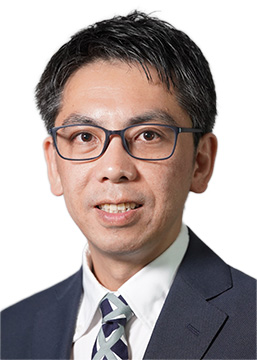
Prof. Yahata, Yoshio (Japan)
Professor, Department of Pulp Biology and Endodontics, Institute of Science Tokyo (Former: Tokyo Medical and Dental University)
Fostering “Micro-Natives” through Visual Sharing
Visual information sharing plays a vital role in dental education. The surgical microscope allows real-time visualization of the operator’s field of view, offering significant educational advantages. Moreover, its digital output integrates smoothly with digital transformation initiatives and online platforms, expanding educational opportunities. To maximize this impact, the bottom-up development of “micro-natives” starting from dental students is essential. In this presentation, Prof. Yahata will share the current state and future direction of these efforts at his institution and explore the potential of emerging educational platforms driven by visual sharing.
Lecture IX Speaker:
Dr. Manickam, Sabrina (Australia)
Lecturer, School of Dentistry and Medical Sciences, Charles Sturt University
The Impact of Dental Microscopy on Early Detection of Extra-Oral Cancerous Lesions
Early detection of extra-oral malignancies—including basal cell carcinoma, squamous cell carcinoma, and cutaneous melanoma—is essential for improving patient outcomes. Dentists, who routinely examine facial and cervical regions, are uniquely positioned to identify early lesions; however, structured training in skin lesion recognition remains limited.
The empirical application of dental operating microscopes for extra-oral cancer screening is yet to be explored. Anticipated outcomes include improved early-lesion detection rates. The findings may establish new standards for opportunistic screening and referral pathways, supporting national and regional goals for early cancer detection.
Lecture X Speaker:
Dr. Atsumi, Katsuyuki (Japan)
Certified Instructor, Japan Association of Microscopic Dentistry (JAMD)
Part-time Lecturer, Faculty of Dentistry, Nagasaki University
405nm Light: The Untapped Potential in Dentistry
The EXTARO 300 FV is the world’s first dental microscope equipped with a fluorescence observation module. It utilizes the principle that protoporphyrin IX, a metabolic product of cariogenic and periodontal pathogenic bacteria, exhibits red fluorescence when observed under visible light at a wavelength of 405 nm. In other words, this technology enables caries, plaque, and calculus to glow red, allowing treatment to be performed while visualizing these elements in real time under magnified conditions. Dr. Atsumi is confident that this technology will significantly change the future of dental treatment. In this presentation, actual treatment videos will be shared and the potential of this innovation will be discussed.
Lecture XI Speaker:
Dr. Lee, Po (Taiwan)
Diplomate, American Board of Periodontology
Adjunct faculty, School of Dental Medicine, Tufts University
High-Fidelity Touch: The Enhanced Tactile Experience in Microsurgery
Magnification reveals details normally invisible to the naked eye, allowing clinicians to translate what they see directly into what they do. This visual clarity guides finer movements, sharper decisions, and more controlled tissue handling. Over time, the “see, then do” process becomes internalized, forming a self-sustaining learning loop. Each microsurgical experience enhances the next: clearer vision leads to better execution, and improved execution deepens the clinician’s understanding of tissue behavior and technique. Through repeated exposure, these visual and tactile impressions accumulate into intuitive skill, creating continuous, self-directed improvement in microsurgery.